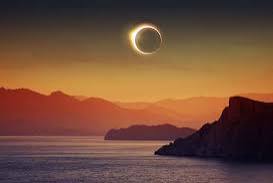
On the night of Sunday, September 7, 2025, skywatchers around the world will have the rare opportunity to witness a breathtaking celestial event—a total lunar eclipse, also popularly known as a “blood moon.” During this extraordinary phenomenon, the Moon will pass into the Earth’s shadow, transforming into a glowing red orb. Events like these are not just visually stunning—they also remind humanity of its connection to the cosmos and the natural cycles that have inspired awe for centuries.
Unlike solar eclipses, which require protective glasses and can only be viewed in a limited path, lunar eclipses are completely safe to observe with the naked eye. This accessibility makes them perfect for family gatherings, educational events, and even casual skywatching, ensuring that millions can marvel at the beauty of the universe.
Understanding the Blood Moon
The term “blood moon” refers to the reddish tint the Moon acquires during a total lunar eclipse. This color results from a phenomenon called Rayleigh scattering, the same process responsible for red sunsets. When sunlight passes through Earth’s atmosphere, shorter-wavelength light like blue and green is scattered out, while red and orange light bends around the Earth and illuminates the Moon. The result is a coppery or deep crimson glow that appears almost otherworldly against the night sky.
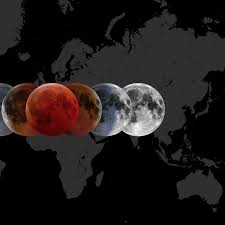
Scientists often use lunar eclipses to study Earth’s atmosphere, as the color and brightness of the eclipsed Moon can reveal information about particles, pollution, and even volcanic activity in our atmosphere. This makes the blood moon not only beautiful but also scientifically valuable.
Eclipse Timing and Phases
The total lunar eclipse on September 7, 2025, will follow a predictable sequence of phases. Observers will see the following:
- Penumbral Eclipse Begins (15:28 UTC): At this stage, the Moon enters Earth’s outer shadow, known as the penumbra. The change in brightness is subtle and can be difficult to notice.
- Partial Eclipse Begins (16:27 UTC): The Moon starts moving into the darker central shadow (umbra), and a noticeable “bite” begins to appear on its surface.
- Total Eclipse Begins (17:30 UTC): The Moon is now fully within the Earth’s umbra, marking the start of totality.
- Greatest Eclipse (18:11 UTC): The Moon reaches its maximum redness and deepest shadow.
- Total Eclipse Ends (18:53 UTC): The Moon begins to exit the Earth’s umbra, gradually returning to its normal silvery appearance.
- Partial Eclipse Ends (19:56 UTC): Only the penumbral shadow remains.
- Penumbral Eclipse Ends (20:55 UTC): The eclipse concludes completely.
The total eclipse phase will last approximately 83 minutes, offering ample time for observation, photography, and even casual stargazing.
Where the Eclipse Will Be Visible
Unlike solar eclipses, lunar eclipses can be seen from anywhere on the night side of Earth. For this blood moon, the best viewing locations will include:
- Asia: India, China, and much of Southeast Asia
- Africa: Eastern and Southern regions, including Kenya, South Africa, and Mozambique
- Australia: Western and Central areas
- Europe: Eastern regions, such as parts of Russia, Greece, and the Balkans
Observers in North and South America will miss this eclipse due to daylight hours, but modern technology allows global participation through live streams, mobile apps, and online astronomy platforms.
Tips for the Best Viewing Experience
To enjoy this celestial show to the fullest, follow these practical tips:
- Choose a Dark Spot: Light pollution from cities can wash out the eclipse. Parks, open fields, or rural areas provide the best viewing conditions.
- Use Binoculars or a Telescope: While the naked eye is enough to see the eclipse, telescopes bring out lunar surface details and enhance the red coloration.
- Bring Comfort Items: Lawn chairs, blankets, and warm clothing can make the experience more enjoyable, as the event lasts over an hour.
- Plan Your Timing: Arrive early to witness the subtle penumbral phase and settle in for the main event.
- Photography Tips: Use a tripod, set your camera to a long exposure, and experiment with ISO and shutter speed to capture the Moon’s reddish glow.
Cultural and Historical Significance
Lunar eclipses have fascinated humans for thousands of years. Many ancient civilizations interpreted these events as omens or messages from the gods. For example:
- In Mesopotamia, eclipses were considered warnings for kings.
- Native American tribes often viewed blood moons as times of change and reflection.
- In China, historical records detail eclipses as events that could predict natural disasters or political upheaval.
Even today, these cultural interpretations persist, demonstrating the enduring impact of celestial events on human thought and spirituality.
Astrological Insights
Astrologers believe that lunar eclipses, especially total eclipses like this one, carry strong influences on emotions, relationships, and personal growth. The September 2025 eclipse occurs in Pisces, a sign associated with intuition, dreams, and creativity. Many astrologers suggest that this event may encourage reflection, the release of old habits, and the embracing of new opportunities. While not scientifically proven, such perspectives can add a personal, symbolic dimension to the experience of observing the eclipse.
Educational Opportunities
Lunar eclipses offer a natural classroom for students, educators, and astronomy enthusiasts. Observing this event can spark discussions on:
- The mechanics of the Earth-Moon-Sun system
- The science of light scattering and color
- Historical observations and cultural interpretations
- The difference between solar and lunar eclipses
Schools, universities, and community groups often organize viewing parties to combine science education with outdoor activity. Students can also practice astrophotography or record observations, making this an engaging and educational experience.
Scientific Research
Astronomers often use total lunar eclipses to gather valuable data. Changes in the Moon’s brightness and color can provide clues about:
- Earth’s atmosphere: Dust, pollution, and volcanic ash affect the red coloration of the Moon.
- Lunar surface properties: The reflectivity of the Moon’s surface is easier to measure when it is illuminated indirectly.
- Space observation techniques: Lunar eclipses offer a safe way to calibrate instruments for studying light scattering and planetary atmospheres.
Thus, while the blood moon is visually stunning, it also contributes to ongoing scientific knowledge.
Conclusion
The total lunar eclipse on September 7, 2025, is a rare and beautiful event that blends science, history, and culture. From its captivating red hue to its place in human mythology, the blood moon is a reminder of the awe-inspiring universe we inhabit. Whether you are observing for pleasure, education, or inspiration, this eclipse provides an opportunity to pause, look up, and connect with the cosmos. Don’t miss the chance to witness this celestial spectacle—a magical event that unites people across continents under the same glowing sky.
About the Author